Quote:
Originally Posted by dsraven

sooo glad you found the leak and got it sealed up. it's hard to believe the builder didn't use a second gasket there but stuff happens and you just gotta let it go. I really hope thats it for leaks now and I'm sure you do to! maybe install the vibration damper/front pulley and anything else that is apart and needs sealing and then run some hot water over the front of the engine, top to bottom, to get rid of any traces of old coolant that can fool you later when doing your pressure test. blow it off and wipe it down so as not to leave water spots that can fool you or mark up the shiny paint. then install the rad etc
if you start to get frustrated with something like this sometimes its a good idea to simply walk away and come back to it in a few days. try to put it out of your mind so you can "cool off" and not do something you will regret later. sometimes we get tunnel vision when we are upset and we can easily overlook the obvious or simply write it off as already good in that area. when you come back to it try to think logically about the problem from a "start over" perspective, sorta like you are taking over a job from somebody else. start a list of things to check and go from there. with leaks I always start at the drip site and work my way upwards until there are no wet or damp spots. shiny new paint can hide leaks because stuff runs off new paint without much of a trace, it doesn't absorb like bare cast iron does. in the past I have used small pieces of paper towel placed at gasket joint areas on painted engines. these absorb the coolant or oil as it runs past and the liquid shows up on the paper towel pretty well so you can see it better. hopefully you won't have to do that. I suggest to clean it, dry it, assemble the cooling system part of things, fill it and burp it, then pressure test it. go have a coffee break for 15 minutes and come back to check the tester, assume you will have a leakdown someplace so you go into it with that mindset instead of getting frustrated if there is a leakdown. go after it systematically from top to bottom and don't forget to check the rad core etc. anything that has been apart runs the chance of having a new leak due to mechanical damage or simply not liking the being bolted up and flexed each time.
anyway, keep us posted with how it works out. you got this.
|
Like you suggest, to find the culprit (short of the upcoming pressure test) I investigated all the areas where a leak could come from. As someone said, water runs down hill. So I started looking at the location of the puddle (the foot of the timing cover). Since the water jacket doesn't extend down to the cam and crank, I decided the one way to eliminate the timing cover itself from consideration was to drain the oil and look for any signs of water in the oiling system. Since it was completely clear, I moved upwards.
The next area was the water pump and all attendant hoses. Every hose clamp was dry, so I had to eliminate the water pump mounting to the backing plate and the backing plate to the block. It was sealed pretty darn tight and examination of both gaskets didn't reveal any smoking guns (or water leaks).
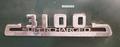
It was explaining the situation to my son that resulted in me looking closer at the thermostat housing. When I was able to see the underside and coolant staining, I then decided to remove it from the supercharger bracket. The gasket behind the bracket and its sealant is visible all the way around it, so I didn't suspect it. But when the thermostat housing came off of the supercharger bracket easily and I could see the lack of sealant or gasket between the two, especially on the underside, was when I realized the likely issue.
Luckily in my stash of excess gaskets and stuff, I found the appropriate gasket for the thermostat to the bracket or block. I used plenty of sealant between all gaskets and the engine block. I have all my fingers crossed (and my toes too) that when I install the radiator and coolant later today that the issue can be put to rest. But I will placing pieces of paper towel where I can to spot any possible leaks.

 04-30-2025, 11:50 AM




 Threaded Mode